Bioprocess Tote Containers
Sustainability at ALLpaQ: Our Journey to B Corp
Sustainability in Bioprocessing at ALLpaQ Over the last 4 years, we have been committed to improving our impact on the […]
May 28th, 2026
The history of bioprocessing is a journey displaying the progression of a rigid, fixed infrastructure toward increasingly flexible, contamination-controlled systems. This article will focus on the difference between the two options many are facing, and discuss the range of benefits from operational performance, contamination control, cost implications, environmental impact and regulatory alignment within cleanroom environments.
For today’s advanced bioprocessing manufacturing, the choice of cleanroom, storage and shipping equipment has remained closely tied to operational priorities: control, scalability, and compliance.
By far the most comparisons and choices in modern facilities are between stainless-steel totes, and plastic reusable systems. Stainless steel has historically been the preferred bioprocessing choice, but as the industry has evolved in recent years, plastic solutions have gained increasing traction.
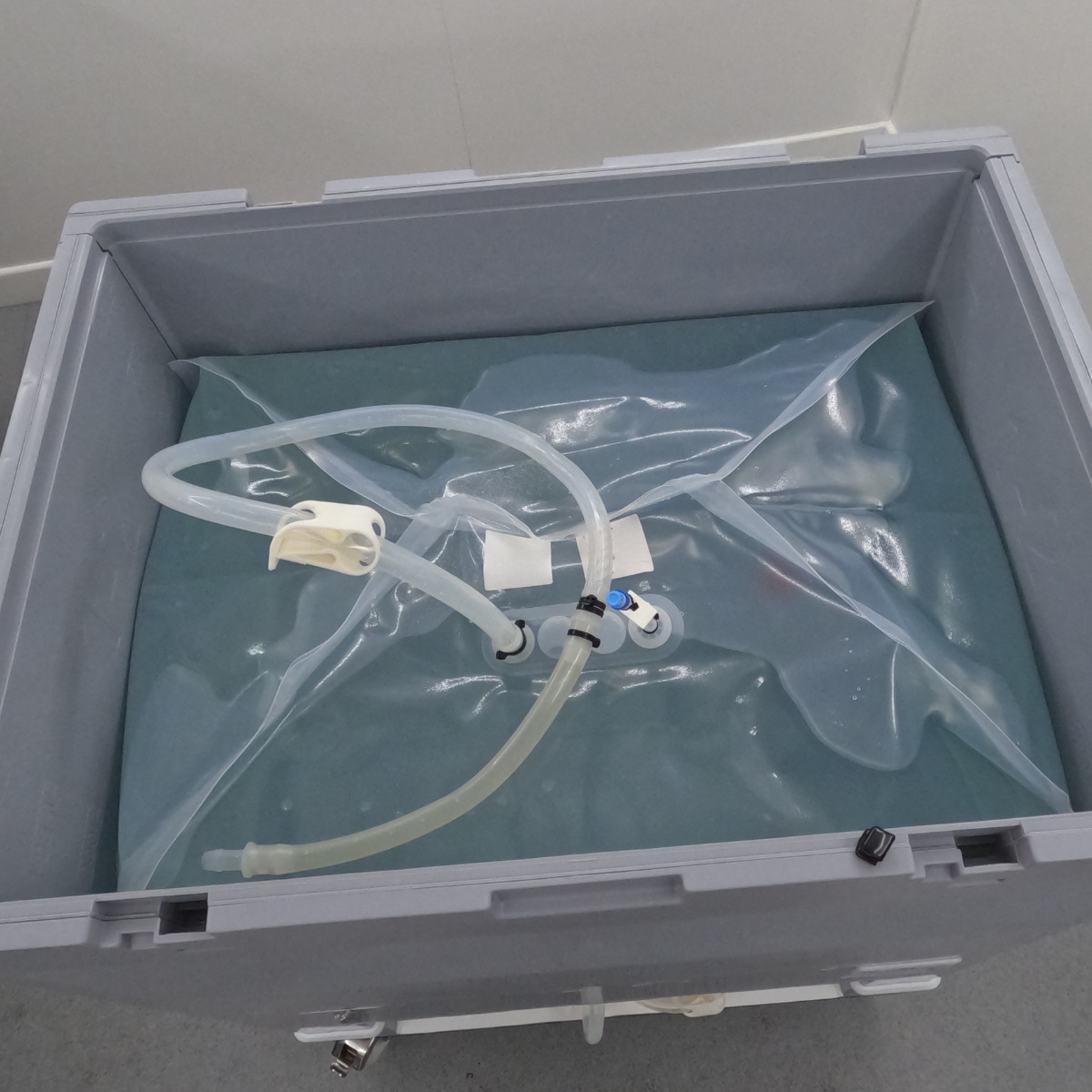
Reusable plastic containers, particularly those manufactured from polypropylene (PP), are now showing evidence of practicality, cost reduction, and space-saving within production facilities. These containers are frequently used to house and protect single-use bioprocessing bags. This provides both structural support and improved hygiene and safer manual handling within cleanroom environments.

Traditional stainless-steel bioprocessing systems dominated early large-scale facilities due to their durability, chemical resistance, and ability to withstand high-pressure and high-temperature operations. These systems are often designed for long production campaigns with minimal product changeover.
However, as the industry has shifted towards a wider range of medium to small facilities, limitations have emerged. Extensive CIP (clean-in-place) and SIP (sterilisation-in-place) requirements introduced downtime, increased water and energy consumption, and added validation complexity within the manufacturing environment.
The introduction of single-use bioprocess bags marked a significant step in enabling faster turnarounds and reduced contamination risk. These bags removed the need for cleaning between batches, improving efficiency in the cleanroom environment. However, reliance on disposable plastic bags created new concerns around waste management, supply chain dependency, and recurring consumable costs.
This context has led to the emergence of reusable plastic systems such as ALLpaQ bioprocessing totes and cleanroom containers, designed to support the safe use, storage, and transport of single-use bags while enabling reuse and reducing facilities’ environmental burdens.
ALLpaQ bioprocess containers are manufactured from high-grade PP, offering a lightweight yet structurally stable secondary packaging. These plastic containers are designed and engineered for shipping, storage and cleanroom use, designed to house single-use bags securely, protecting them from external damage during handling and transport.
The ALLpaQ reusable containers are designed to reduce contamination risk by eliminating the need for invasive cleaning cycles that are necessary with fixed stainless-steel systems. Their smooth surfaces and cleanroom-compatible construction allow for validated cleaning protocols without the complexity of CIP/SIP infrastructure.
Contamination risk remains a primary concern in biopharmaceutical manufacturing. Stainless-steel systems rely on validated cleaning cycles to maintain sterility, but these processes introduce variables related to human intervention, water quality, and cycle consistency within the production environment.
Single-use bags reduce the risk of cross-contamination by design, as each batch uses a new sterile bag. Bags alone can be vulnerable to handling damage if deployed and handled incorrectly; on-site training and support are valuable services offered.
Integrating bags within reusable plastic bioprocess containers will improve protection and control of your single-use bags, particularly during transfers within the cleanroom environment.
Operational flexibility has become increasingly important in facilities managing multiple products or variable demand.
Stainless-steel totes are less adaptable due to their fixed nature and dependence on installed infrastructure.
Reusable plastic systems offer a more flexible alternative. They allow operators to reuse validated containers while swapping out single-use bags as needed. This supports faster turnaround, simplified logistics, and reduced storage requirements compared to maintaining multiple stainless-steel vessels.
Additionally, these containers act as space-saving packaging solutions that can be folded, collapsed and stacked after use or between batches, optimising valuable storage space within controlled environments.
From a capital expenditure perspective, stainless-steel systems require significant upfront investment, including installation, piping, and CIP/SIP infrastructure.
Reusable plastic containers provide a cost-sustainable approach. Facilities are able to reuse containers while benefiting from the flexibility and time-saving single-use bags. This reuse model can support cost control while maintaining adaptability across different processes.
Typically, a ground-up design and build of a single-use facility also requires a smaller operational footprint, offering potentially considerable real estate and facility build costs.
Sustainability assessments in bioprocessing are increasingly focused on the full lifecycle impact of systems within the manufacturing environment.
Stainless-steel systems offer long service life but require significant water, validation and energy input for cleaning.
Reusable plastic systems alongside single-use bags, such as ALLpaQ containers, support reuse strategies that reduce overall waste generation. By enabling the reuse of the outer container while limiting disposal to the internal bags, facilities can better manage environmental impact. This approach contributes to a more efficient packaging model and can reduce the burden on waste handling systems.
This year, ALLpaQ have also achieved a B Corp Certification on their environmental and social impact in the manufacturing industry, reflecting that sustainable options are available, without affecting the quality or durability. We also hold EcoVadis Gold and ISO 14001, demonstrating our mission on innovation and sustainable development.
The evolution from rigid stainless-steel systems to reusable plastic bioprocess containers highlights a broader shift towards flexibility, efficiency, and contamination control within the cleanroom environment.
Compared to fixed stainless-steel systems, reusable bioprocess totes improve your space efficiency and enable more controlled packaging and transport within the cleanroom environment.
Need more information about any of our bioprocessing products?
You can speak to our experienced team today for product guidance and placing orders. We’re always happy to assist and support you in any way possible.
You can simply email us at enquiries@allpaq.com , and we’ll get back to you ASAP.
TAGS: ALLpaQ, Biopharmaceutical, Bioprocess Containers, cleanroom, Plastic Bioprocess Containers,